

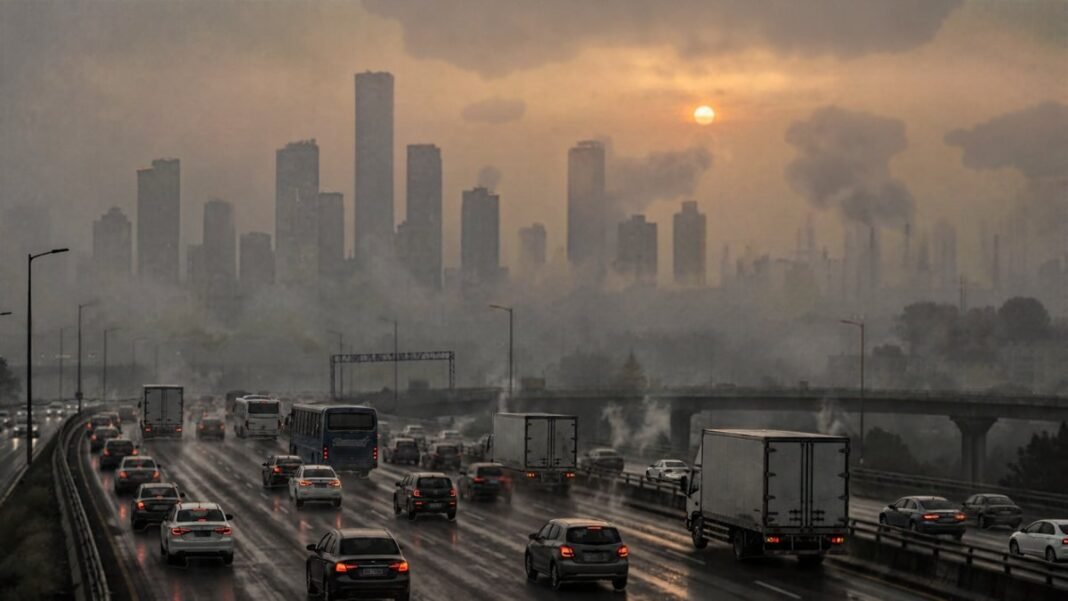

Every winter, north India’s air turns toxic, and this year has been no different. After Diwali on November 8, 2026, live air quality rankings from AQI.in showed that 93 of the world’s 100 most polluted cities were in India, with Sri Ganganagar in Rajasthan at the top of the list. In parts of Delhi, pollution early on November 9 was more than 58 times the World Health Organization’s recommended daily limit. If you live in an affected city, knowing how to read AQI numbers and how to protect yourself can make a real difference to your family’s health. Here is a practical guide.
Table of Contents
What is AQI?
The Air Quality Index (AQI) is a single number that tells you how polluted the air is and how risky it is to breathe. It combines readings of several pollutants, the most important of which in Indian winters is PM2.5, tiny particles less than 2.5 micrometres wide that can travel deep into the lungs and even enter the bloodstream.
India’s AQI categories explained
India’s official National Air Quality Index, published by the Central Pollution Control Board (CPCB), uses six categories:
- 0–50 (Good): Minimal impact.
- 51–100 (Satisfactory): Minor breathing discomfort for sensitive people.
- 101–200 (Moderate): Discomfort for people with lung or heart disease, children and older adults.
- 201–300 (Poor): Breathing discomfort for most people on prolonged exposure.
- 301–400 (Very Poor): Respiratory illness on prolonged exposure.
- 401–500 (Severe): Affects healthy people and seriously impacts those with existing diseases.
Why do different apps show different AQI numbers?
This confuses many people. On November 7, 2026, a day before Diwali, the Swiss tracker IQAir ranked Delhi the most polluted major city in the world with a reading of 581, while India’s pollution board reported 363 for the city around the same time.
Neither was necessarily wrong. The difference comes from:
- Different scales: IQAir and many international apps use the US AQI scale, which treats the same level of PM2.5 as more dangerous than India’s scale does. India’s index is also capped at 500.
- Different monitoring stations: Apps may average different sensors or use low-cost sensors alongside official monitors.
- Different time windows: Some show hourly readings, others 24-hour averages.
The practical lesson: compare numbers on the same app over time rather than across apps, and pay attention to the category label. For official readings, use the CPCB data or its SAMEER app.
Why is the air so bad in winter?
- Weather: Cold, still air traps pollution close to the ground, a process called temperature inversion.
- Crop residue burning: Farm fires in Punjab, Haryana and nearby states add smoke in October and November.
- Vehicles and industry: Year-round emissions build up when the wind drops.
- Construction dust and waste burning.
- Firecrackers: Diwali fireworks cause a sharp short-term spike, even with “green” crackers, which produce fewer emissions but are not pollution-free.
How to protect yourself from air pollution
1. Check the AQI before going out
Make it a daily habit, just like checking the weather. When AQI is Poor or worse, cut back on time outdoors.
2. Wear the right mask
Cloth and surgical masks do little against PM2.5. Use a well-fitting N95 or FFP2 mask that seals around your nose and chin. Replace it when it becomes dirty, damp or hard to breathe through.
3. Move exercise indoors
Running or cycling makes you breathe faster and deeper, pulling in more particles. Doctors have urged residents to skip morning runs on high-pollution days, when pollution is often trapped near the ground.
4. Clean the air at home
- Use an air purifier with a true HEPA filter, sized for your room. Check its CADR (clean air delivery rate).
- Keep windows closed during peak pollution, usually early morning and late evening.
- Avoid burning incense, mosquito coils or wood indoors.
- Mop instead of sweeping to avoid stirring up dust.
5. Protect children and older relatives
Children breathe faster relative to their size, and older adults are more likely to have heart or lung conditions. Limit their outdoor time on bad days and watch for symptoms.
6. Stay hydrated and eat well
Drinking enough water helps your body clear irritants, and a diet rich in fruits and vegetables supports your overall health. This is not a substitute for avoiding exposure, but it helps.
Symptoms that need a doctor
Seek medical advice if you or a family member has:
- Persistent cough or wheezing
- Shortness of breath or chest tightness
- Worsening asthma or COPD symptoms
- Chest pain or an irregular heartbeat
- Unusual tiredness or headaches that do not go away
People with asthma, heart disease, diabetes or who are pregnant should talk to their doctor about a winter pollution plan.
What is GRAP?
In Delhi-NCR, authorities use the Graded Response Action Plan (GRAP), which triggers stricter restrictions as AQI worsens. Measures can include limits on construction, curbs on certain vehicles and, at the highest stages, switching schools to online classes. Keep an eye on local announcements when AQI enters the Very Poor or Severe range.
The bottom line
Air pollution in Indian winters is a serious, recurring health risk, not just an inconvenience. Learn to read AQI, use one trusted source consistently, wear an N95 mask outdoors on bad days, clean the air at home and take extra care of children and older family members.
This article is for general information and is not medical advice. Consult a doctor for personal health concerns.


